
You need to grasp the significance of zeta potential testing in nanoparticle characterization. This test measures the electrostatic potential around nanoparticles Zetasizer, revealing their stability in suspension. Understanding these metrics is essential, especially when considering applications in drug delivery and industrial processes. As you explore this topic further, you’ll uncover how these measurements can predict particle behavior and influence formulation strategies. What implications does this have for your work?

What Is Zeta Potential?
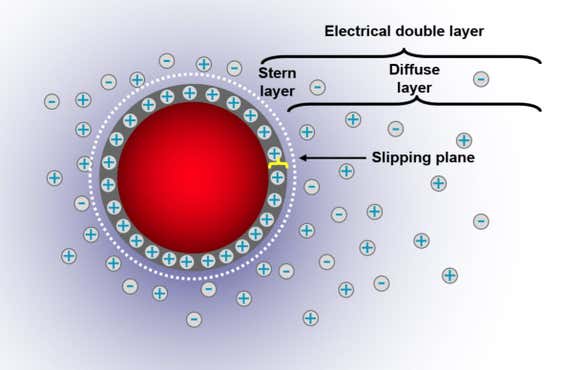
Zeta potential is a key indicator of the stability of colloidal dispersions, reflecting the electrostatic repulsion between particles.
You can define zeta potential as the potential difference across the static layer of liquid surrounding a particle, which influences its behavior in suspension. This measurement is essential for understanding the charge distribution within a colloidal system.
When particles possess a high zeta potential Lab Alliance, they exhibit strong electrostatic repulsion, preventing aggregation and ensuring stability. Conversely, low zeta potential values suggest weak repulsion, leading to potential flocculation or coagulation.
By analyzing zeta potential, you can gain insights into the surface charge characteristics of nanoparticles, which directly impact their interactions in various environments.
Ultimately, understanding zeta potential allows you to optimize formulations in fields such as pharmaceuticals, cosmetics, and materials science, ensuring the effective delivery and stability of your colloidal systems.
Importance of Zeta Potential in Nanoparticle Stability
Understanding zeta potential is essential for maintaining the stability of nanoparticles in various applications. The surface charge of nanoparticles directly influences their interactions with surrounding media, impacting their propensity for aggregation.
When the zeta potential is high, either positively or negatively, it indicates strong repulsive forces between particles, reducing the likelihood of aggregation. Conversely, low zeta potential values suggest that attractive forces may dominate, leading to increased nanoparticle aggregation and instability.
Monitoring zeta potential allows you to optimize formulations, ensuring that nanoparticles remain dispersed and functional. In drug delivery, for instance, stable nanoparticles enhance bioavailability and therapeutic efficacy.
In contrast, instability can lead to undesired aggregation, compromising performance. By understanding and controlling zeta potential, you can noticeably improve the reliability and effectiveness of nanoparticle-based applications, thereby harnessing their full potential in diverse fields such as medicine, cosmetics, and electronics.
Methods for Measuring Zeta Potential
Several methods exist for measuring zeta potential, each offering unique advantages and limitations. One of the most common techniques is electrophoretic mobility, where you apply an electric field to disperse particles in a liquid medium. By measuring the velocity of charged particles, you can determine their zeta potential. This method is sensitive and suitable for a wide range of particle sizes.
Another effective approach is dynamic light scattering (DLS). In this method, laser light is scattered by particles in motion, allowing you to assess their size and zeta potential indirectly. While DLS is excellent for analyzing small particles, it may not provide accurate results for larger or polydisperse systems.
Choosing the right method depends on your specific requirements, such as particle size, concentration, and the medium’s characteristics.
Understanding these methods enables you to obtain reliable and relevant zeta potential measurements for your nanoparticle characterization.
Applications of Zeta Potential in Various Fields
The measurement of zeta potential plays a significant role across various fields, influencing the behavior and stability of colloidal systems.
In biomedical applications, understanding zeta potential is essential for optimizing drug delivery systems, as it affects the interaction between nanoparticles and biological tissues. By fine-tuning zeta potential, you can enhance cellular uptake and improve therapeutic efficacy.
In industrial processes, zeta potential helps in formulating stable emulsions and suspensions, which are critical for products like paints, inks, and cosmetics. Monitoring zeta potential enables you to predict and control the stability of these formulations, reducing the risk of agglomeration or sedimentation.
Additionally, in wastewater treatment, zeta potential assists in optimizing flocculation processes, thereby enhancing the removal of contaminants.
Conclusion
In conclusion, understanding zeta potential is essential for characterizing nanoparticles and ensuring their stability in suspension. By accurately measuring this electrostatic potential, you can predict and optimize the behavior of nanomaterials across various applications. Whether you’re formulating drug delivery systems or improving industrial processes, a thorough grasp of zeta potential will enable you to make informed decisions that enhance performance and reduce aggregation risks. Ultimately, mastering this test is key to advancing your research and development efforts.
…